
The world’s largest travel site TripAdvisor announced in October 2016 that it refuses to sell tickets to attractions that allow contact with captive wild animals or endangered species. TripAdvisor’s decision may have far-reaching consequences and it may prevent animal cruelty. (Liimatainen 2016.) There are thousands of tourist destinations in the world, where you can see wild animals. Some of these focus on the research and protection of endangered species, and acquire financing, for example, by means of tourism. However, some sites are only commercial, and their aim is to make a financial profit at the expense of the animals. (Napsu 2016.)
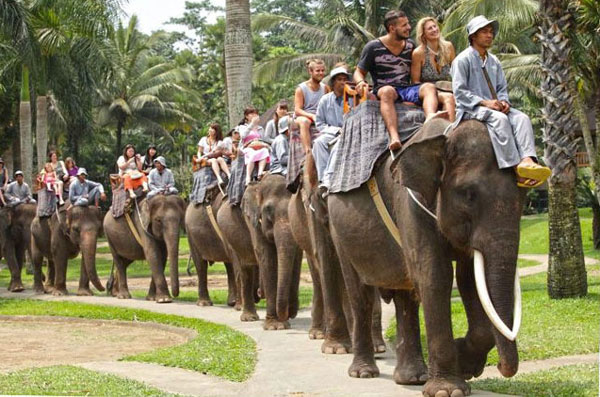
The commercial ones include for example the attractions which involve contact with animals such as swimming with dolphins, riding an elephant or petting a tiger. At such attractions, animal welfare is not always paid attention to, and animals may end up facing cruelty. Usually tourists don’t know that elephant rides and other wildlife attractions can cause harm to the animals. For example, swim-with programs are very harmful for dolphins, and most of them have been captured from the wild. Wild dolphins, in turn, are repeatedly disturbed by boats and swimmers. Also, those animal-based attractions do not always participate in the animal protection or research in any way, but instead, they are set up only for entertainment purposes. (Napsu 2016.)
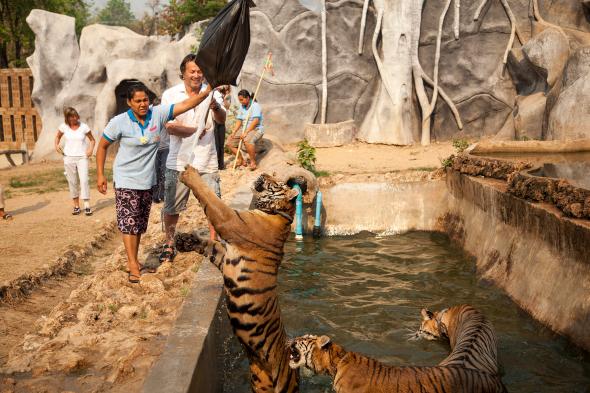
From the beginning of 2017, TripAdvisor will no longer sell tickets to attractions, where the animals are forced to physical contact with people. An exception will be zoos which are established for conservation or educational purposes where visitors can, for example, feed animals under guidance of the staff for the purpose of education. However, TripAdvisor will demand such attractions to have a certificate stating that the activity is carried out according to TripAdvisor’s animal protection criteria. (Napsu 2016.) The company is also planning to introduce an educational portal that provides links and information about animal welfare policies (M&M 2016.). Even though TripAdvisor is most likely polishing its own brand, the decision may genuinely improve the better treatment of animals. (Liimatainen 2016.)
Sources:
Bale, R. 2016. National geographic. TripAdvisor Halts Ticket Sales to Cruel Wildlife Attractions. URL: http://news.nationalgeographic.com/2016/10/wildlife-watch-tripadvisor-animal-tourism-ticket-sales/. Accessed 7.12.2016
Griyasari n.d. Figure. Elephant riding in Bali. URL: http://griyasari.com/listings/elephant-riding-trekking/. Accessed 7.12.2016
Napsu 2016. Loppu villieläinten hyväksikäytölle viihteen ja turismin nimissä! URL: http://www.napsu.fi/matkailu/uutiset/loppu-villielainten-hyvaksikaytolle-viihteen-ja-turismin-nimissa-139. Accessed 7.12.2016
M&M 2016. TripAdvisor linjasi – villieläimille haitallisiin kohteisiin ei enää saa lippuja. URL: http://www.marmai.fi/uutiset/tripadvisor-linjasi-villielaimille-haitallisiin-kohteisiin-ei-enaa-saa-lippuja-6590714. Accessed 7.12.2016
Liimatainen, K. 2016. Helsingin sanomat. Maailman suurin matkailusivusto laittaa villieläimille haitalliset turistikohteet pannaan: Merkittävä askel kohti julmuuksien lopettamista. URL: http://www.hs.fi/matka/art-2000002925229.html. Accessed 7.12.2016
National geographic 2016. Figure. Tigers. URL: http://news.nationalgeographic.com/2016/10/wildlife-watch-tripadvisor-animal-tourism-ticket-sales/. Accessed 7.12.2016
 Animal ethics & Zoos